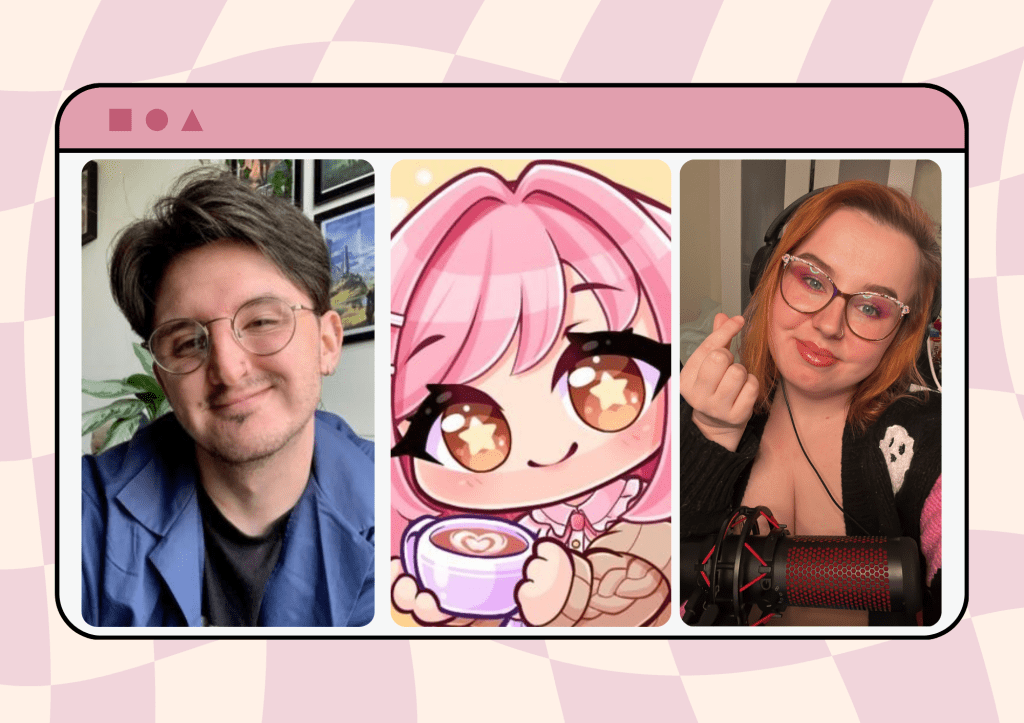
Since being diagnosed with autism last year, I realised I’ve always had a real affinity for content creators who are also neurodivergent, even before I realised I was autistic myself. I loved watching others play my favourite games and discussing them amongst a community who is as passionate as I am about my favourite things. Nowadays, streaming platforms such as Twitch are huge among content creators, with neurodivergent streamers and viewers alike flocking to the platform and finding a sense of community there. I’m having a chat with some neurodivergent Twitch streamers to discuss their channels, their community and how they make their spaces welcoming for everyone.
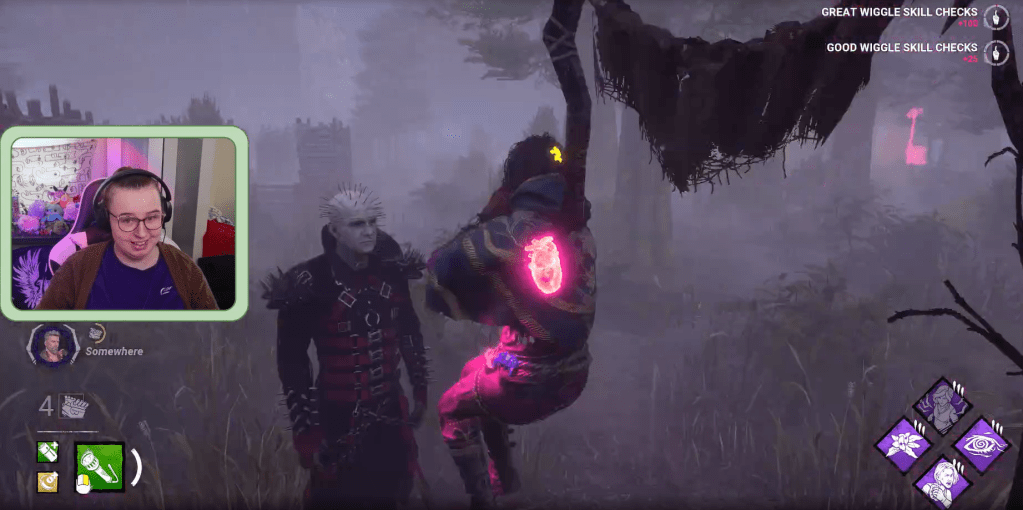
Streamer and mental health advocate Liv (she/her) streams as theselfcaregamer. Starting her streaming journey in 2022, Liv wanted to find people with similar interests: “Since I was in middle school, I loved to watch let’s plays on YouTube. I’ve always been extremely connected to video games as a hobby, community, and a special interest. I really wanted an opportunity to be more creative, and make friends who were like me and shared the same interests and hobbies, so I decided to finally give streaming a chance.”
Liv also found that streaming gave her the unexpected opportunity to incorporate what she loves about performing arts. She described how her love for all things performing lends itself well to streaming: “I’ve been involved with performing arts since I was a toddler. Though I prefer to be backstage, I’ve had plenty of time on the stage through acting, singing and dancing. I enjoy how streaming combines all of my interests into one thing. You need to be able to perform in front of an audience, control your own tech equipment, and manage the business components, [such as] marketing your streams, building your community, [and] seeking out partnerships. Streaming has given me a voice to utilise my performing arts background to share my love of video games, and advocate for what’s important to me to a larger audience.”
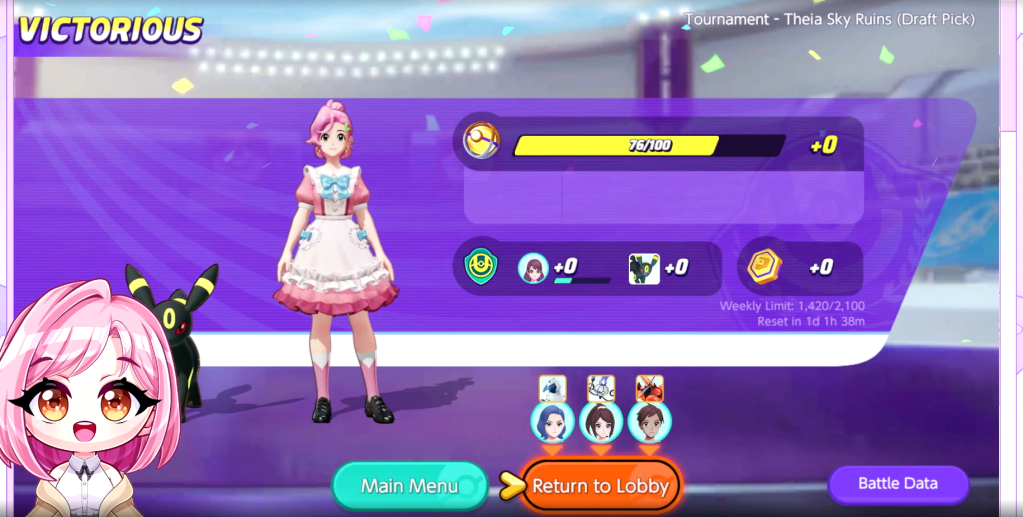
Chloe (she/they), also known as lethaljesus on Twitch, similarly began streaming in 2022 but ended up having to stop due to personal reasons until 2024. They turned to streaming after finding it difficult to hold down a flexible job. What started as a hobby quickly became a lifeline: “I always loved seeing people’s joy in streaming and felt that Twitch became a pretty solid part of my life during the pandemic; I was living and isolating alone, so Twitch was a nice little escape. I realised then as a viewer that I really wanted to give streaming a go. Then, I unfortunately acquired a disability that meant I had to leave my job and has made it difficult for me to find flexible work within my limits. I finally took the leap and started streaming. It provided an escape from daily life but also provided me with a purpose!”
Being able to interact with a wide range of people worldwide is what makes streaming enjoyable for Chloe. They spoke about how their community gives them purpose: “I meet so many incredible people. I have made lifelong friendships that originated on Twitch! I am forever in awe at just how much a community can come together [here]. I love getting to share my hobbies and my insights with people who share my interests. I love going live and making someone’s day. That’s what it’s all about! Making people smile. Including myself!”
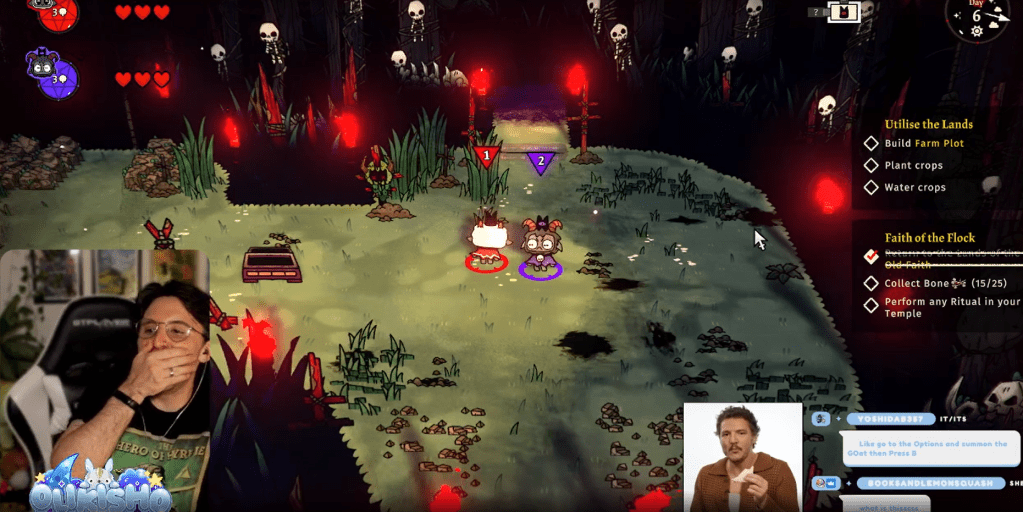
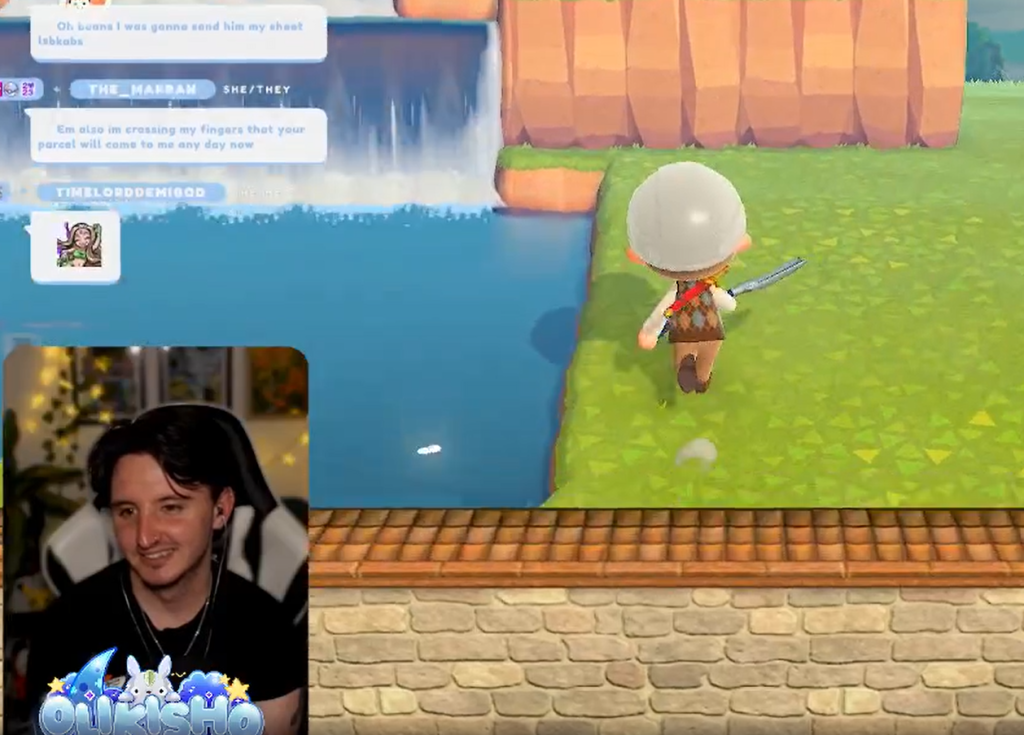
Streamer and gaming industry Junior Community Manager Oli Kisho (he/him) also found streaming a great way to connect with others during the pandemic. With four years of streaming under his belt, Oli found that playing his favourite games alongside watching a stream motivated him to continue: “I started streaming during Covid when I was living mostly by myself and wanted to show people the Animal Crossing island I had been working on. I loved that on Twitch, you could body double by playing the same game a streamer was playing whilst watching them, it made me so motivated to play games. I also love how much streaming scratches the creative part of my brain, I love creating things, and I love video games and it was a great way to combine them together.”
Oli’s love for talking about his special interests makes streaming a particularly rewarding career. He talked about how sharing his special interests brings him joy: “I can’t lie, I’m a chronic yapper; I will chat for days. I love that I can share my special interests, often related to gaming, with other people who understand the feel the same, people who also have the same interests and hobbies. Finding that community was crucial to me during Covid, and to be honest I don’t know what I would do without these people now.
“It’s like a little dopamine hit every time I hit ‘go live’ and get to share my silly video games with people who want to know about it!”
The sense of community can be a real draw for creators and viewers alike. Neurodivergent streamers can create a real sense of belonging for groups who may be unfairly excluded from other spaces. Liv’s community, the Silly Spoons, focuses on the ability for people to fully be themselves: “I wanted to create a space where likeminded people can truly be themselves without shame. A lot of us were the bullied kids growing up; we fully deserve to be valued and supported for who we are, not who others want us to be.”
Chloe considers herself to be their community’s “big sister”, supporting her viewers through any stage in their life. Their community, called the Bubble Barn, also advocates for inclusivity, and allows the community to come as they are to her streams: “We praise the idea of slow and intentional living, of resting and of taking care of ourselves and others. We’re silly gamers who just want to have a corner on the internet that accepts and encourages that silliness, getting in touch with our inner child, and being all around good humans.”
Oli has built friendships through his supportive and inclusive streaming community, describing them as a ‘game changer’ for him: “My community is mostly made up of Neurodivergent, LGBTQIA+ and disabled people and it’s been such a healing place to be a part of. They are a hilarious, loving, kind, diverse group of people and I’ve met some of my best friends from the community we’ve built. Everyone is so understanding of each other’s needs and supportive, and this is the first place where I’ve had the support and comfort of a large group of other trans people who are also neurodivergent around me. It’s been a game changer to have that intersectionality.”
There are huge positives for neurodivergent people in the streaming space, but it doesn’t come without its downsides. As disabled people, sometimes energy levels are low and streamers are unable to keep up a regular schedule. Liv talked about how struggling with rejection sensitive dysphoria, a symptom of ADHD and autism, can also interfere with her streaming: “I experience really bad rejection sensitive dysphoria, which makes it hard to deal with constant rejection. You’re not going to make every stream team you apply for, get every partnership you want, and sometimes your streams won’t perform to your expectations. That’s all part of being a streamer that you have to accept.”
Liv also described how being autistic can make it difficult to figure out others’ intentions: “Sometimes, when you are doing well, it’s hard to know who to trust. Who likes you for your authentic self, and who just sees you as a stepping stone to expand their audience or befriend one of your friends. It can definitely be confusing to deal with, especially as an autistic person.”
Chloe finds that they can get caught in an overthinking spiral during streaming due to her condition: “This is such a silly thing to say but one of my greatest challenges with streaming is being perceived. My energy-limiting condition often means I don’t have the energy to be the most put-together person; It can be easy to get in my head and overthink if people think I’m dim, or not trying hard enough!”
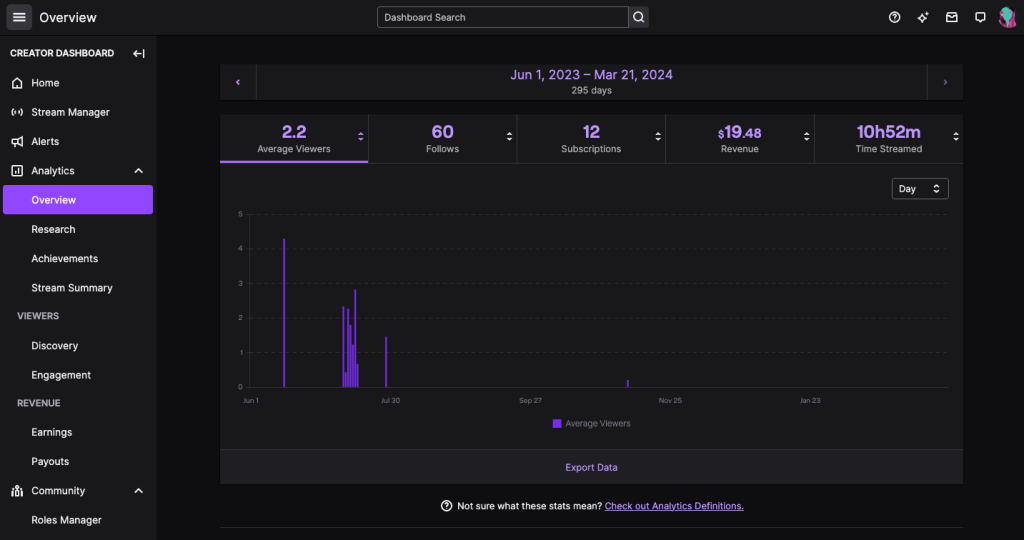
According to data by SullyGnome, there was a huge drop in active streamers once analytics tracking became more accurate on Twitch. Chloe mentioned how analytics can create an unhealthy mindset in streaming, and what she’s been doing to combat this: ” [Streaming] is all very numbers and analytics driven. I’ve been trying to reframe my mindset on streaming to be less about the numbers I gain, but instead more about the community I build and the space I am aiming to provide for them, and this has been a huge help for my mental health! I’ve also found that combating jealousy with pride for others’ achievements is fundamental in the streaming space.”
Communities like Liv’s, Chloe’s and Oli’s are commonly described as “safe spaces”; areas of the internet where all identities are welcome and hate speech is not only frowned upon, but quickly banned. These spaces are fantastic for marginalised people to find respite from trolls and bigotry online. Welcoming people of all identities is not only beneficial for the viewer, but also for the streamer themselves, as Oli described: “The world is stressful and 100% not built for us at all. I wish I had more of a community like this growing up and in the start of my adulthood; I felt like I was broken because I couldn’t do things the way others did. I was always the “weird and annoying” kid, and so I learnt to build up a mask.
“Since being part of this community I’ve learnt SO much about my brain, how it works and I’ve learnt that it’s safe to unmask. I feel like I’m learning who I am all over again and I wouldn’t have done it without this community. And that goes for all minority identities; everyone deserves a space of people who understand. I really think streaming has been the best and most accessible way for me to find [that space].”
Describing inclusivity as needing to be “at the forefront of all organisations, ideas and opportunities”, Chloe emphasised how spaces like these can create more open minded individuals: “Providing spaces where marginalised people can be vocal about their struggles, their wins and ideas opens the door to creating spaces that are more welcoming and better equipped to support people with their needs and their connections. Streaming is a very public-facing thing, so I think it is essential that we as streamers be open-minded and provide a platform for marginalised groups.”
Liv described how it is vital for streamers to put in the work to create a safe community, but the ultimate decision as to whether the space is a safe space is up to marginalised groups themselves: “It is purely up to those with the most intersectionality of marginalisation to decide if your community feels like a safe space for them. As a streamer, you should be putting in the work to make your community safe. For me, that includes constant education, making my rules and community values as clear as possible, moderating my streams and social media posts, and not allowing bigotry to exist in any situation. I have no right to call myself a safe space, but I will absolutely fight to keep my stream a space safe for my community members. I have a no tolerance policy for sexism, racism, homophobia, transphobia, ableism or any other forms of bigotry.
“I also try to view my space in a trauma-informed lens and try to make my streams as sensory friendly as possible to better support neurodivergent community members. My streams have anonymous follows, and have little to no loud sound effects, as sudden intense sounds can cause sensory overstimulation for autistic viewers or those with PTSD. I think it’s important to take a moment when creating anything to ask yourself “Am I being accessible enough? Am I the right person to tell this story?”
Providing welcoming spaces for all identities has, and always will be extremely important. Thanks to the internet, people worldwide can now chat with others and feel like they belong. However, more work needs to be done to ensure that every space welcomes marginalised people. As Liv says: “Making space for neurodivergent and marginalised people should never be an afterthought.”
 SweetieGames
Leave a comment