Over the years I’ve been a member of many fanbases. I got into Dragon Quest at age 10 and started watching anime such as Death Note and Attack on Titan at age 15, and from there the fanbases I’ve been in have snowballed to the point where I can’t keep up with them anymore (especially as a University student!)
Ever since I joined online fandom spaces in my early teens, something has been polarising in every single one. Should we like what has been dubbed “morally grey” characters?
Lets start by defining what a morally grey character is. According to WritingBeginner, a morally grey character is “[someone] who is not completely good or completely evil. It’s the characters who wobble in the “grey” area between hero and villain.”
Morally grey characters have existed for as long as fiction has existed, and have appeared in every piece of media from books, to plays, to films, to TV shows and of course video games. They’ve also always had their fans; I loved L when I watched Death Note for the first time, and he’s definitely no angel (but then again, he may look like one in comparison to some of the other characters in that show). The name suggests that they’re in a grey area between being a hero or a villain, but that doesn’t stop many fans from seeing their actions in black or white!
Now let’s look at a specific example. My all time favourite fictional character could be described as “morally grey”, and is also from my favourite video game. I am talking about Takuto Maruki from Atlus’ 2019 JRPG title Persona 5 Royal. Of course, this next part is gonna have spoilers!
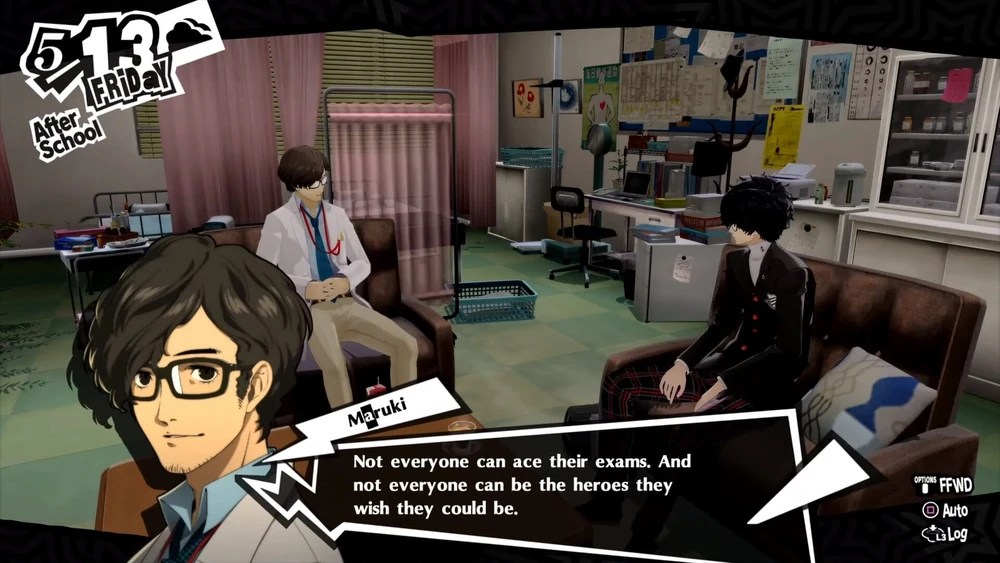
A character added for the extension of 2016’s Persona 5, Takuto Maruki is a researcher turned school counsellor whose confidant revolves around therapy sessions with the protagonist. Little does he and his friends know that what they’re telling him will end up altering the very reality they live in, as Maruki creates a “dream world” with his very own abilities and places himself as their God, with a goal to end all human suffering and trauma. He believes nobody should suffer as he did after he lost his fiancée.
Maruki is a perfect example of a well written morally grey character. He has the best intentions, as he wants to create a world without suffering, but his means of doing so are manipulative, and he’s willing to sacrifice himself to get what he wants. When I finished the game, which resolves Maruki’s story arc, I knew I had come across an incredibly special character. He floated very ambiguously in the greyscale of morals.
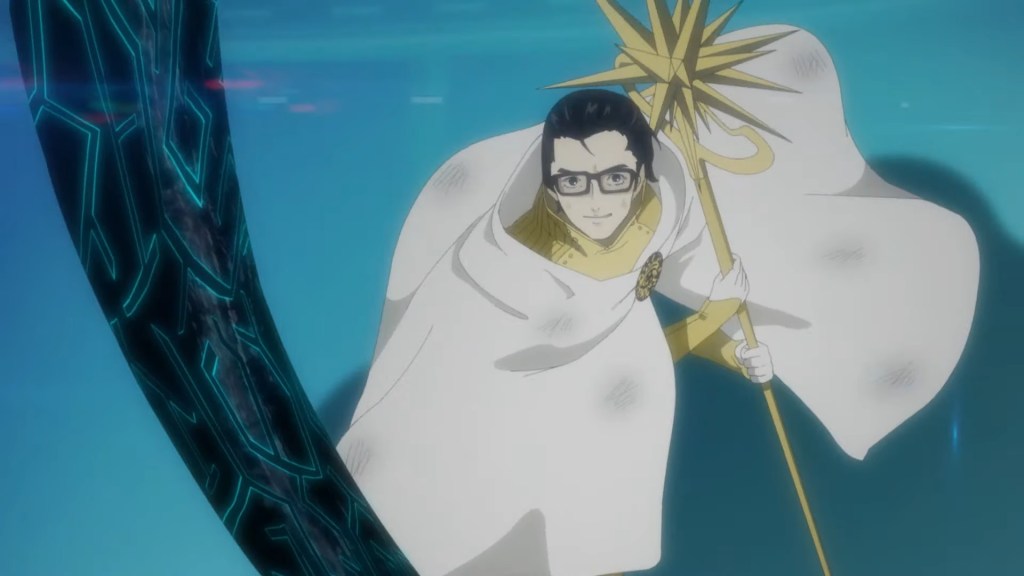
This didn’t stop people in fandom spaces having heated debates online as to whether he’s a villain and whether his ideals were good or bad. I was reading a lot of black-or-white mindsets, where the protagonists are the “good guys” and Maruki is the “bad guy”. The people who love him think he did nothing wrong, that he was correct the entire time and that his means of getting what he wants were flawless and right. The people who dislike him seem to really hate him, calling him a manipulator with a God complex who preys on vulnerable people to get what he wants. They question how you could ever like a character so horrible. And those who love him question how you could hate a character who just wants the best for people, and brought a fan favourite character back from the dead (yes, a reminder that this did happen).
As I mentioned before, I love Maruki. I loved playing his story and his interactions with the protagonist and his friends before the final arc, as well as during it. You can see through his dialogue that he genuinely cares, and everything he does he believes is for the benefit of those he cares about. But he’s wrong. He’s willing to listen to the opinion of the protagonists who oppose him, but it won’t stop him believing that he’s right. He thinks what he’s doing is for the best, even if the protagonists don’t like it. He tells them that he doesn’t want to fight, but will do if that’s what it takes for them to approve of him.

I still like him despite not agreeing with his methodology. I can see the thought behind it but it wasn’t the correct approach in my opinion. It is manipulative, and also in Maruki’s reality the protagonists haven’t learned anything. They’ve forgotten their Phantom Thief days and instead have been given everything they’ve ever wanted, reverting them back to the way they were before the game’s events.
In the Persona 5 Royal Complete Guide, the creators stated that they put extra effort into making him a sympathetic character, unlike the other antagonists of the game. I do think he has a Messiah complex (this is clearly evidenced throughout his dialogue), but I don’t have to hate him for it. After all, he’s just pixels. He can’t hurt you. He’s well written and complex and the devs really succeeded in making you feel for him. You root for him, but not in the same way you root for the protagonists. You want him to see the errors of his ways and move on from his grief. Also his final boss music “Throw Away Your Mask” is the best song on the entire Persona 5 soundtrack.
It’s about time we stop seeing characters in black and white in fandom spaces. It’s not a heinous crime to like a morally grey character; it doesn’t mean I support their actions or would think they were good people if I heard the things they say in the real world. Of course, having good intentions doesn’t mean you have to like them. I accept that not everyone is going to like the character in question after what they did. I like good characters in the sense that I like good writing; whether they be a protagonist, antagonist or something in between. And people shouldn’t have to fight about that.
What do you think about morally grey characters? Let me know below!




 SweetieGames
Leave a reply to sinopticss Cancel reply