This year, I found myself playing Dungeons and Dragons for the first time. I’m a creative writer, and being given free reign to make whatever character I wanted to use within the game has been a lot of fun. Creating my own character has led to me having a huge attachment to him though.
In the past, I’ve used creative writing as an outlet to explore and process various aspects of my life. My book I’ve been meaning to write for the past 9+ years started out as an exploration of my Generalised Anxiety Disorder diagnosis which I received at the time, where the main character deals with the disorder himself and finds his inner strength to live alongside it. Every character I write holds a piece of me, whether that be in terms of personality or just that they’re similar to characters I enjoy in other media. My DnD character is no different. His personality isn’t entirely like my own, but he was made at a time where I was dealing with my upcoming autism assessment and subsequent diagnosis. My character is unabashedly autistic.
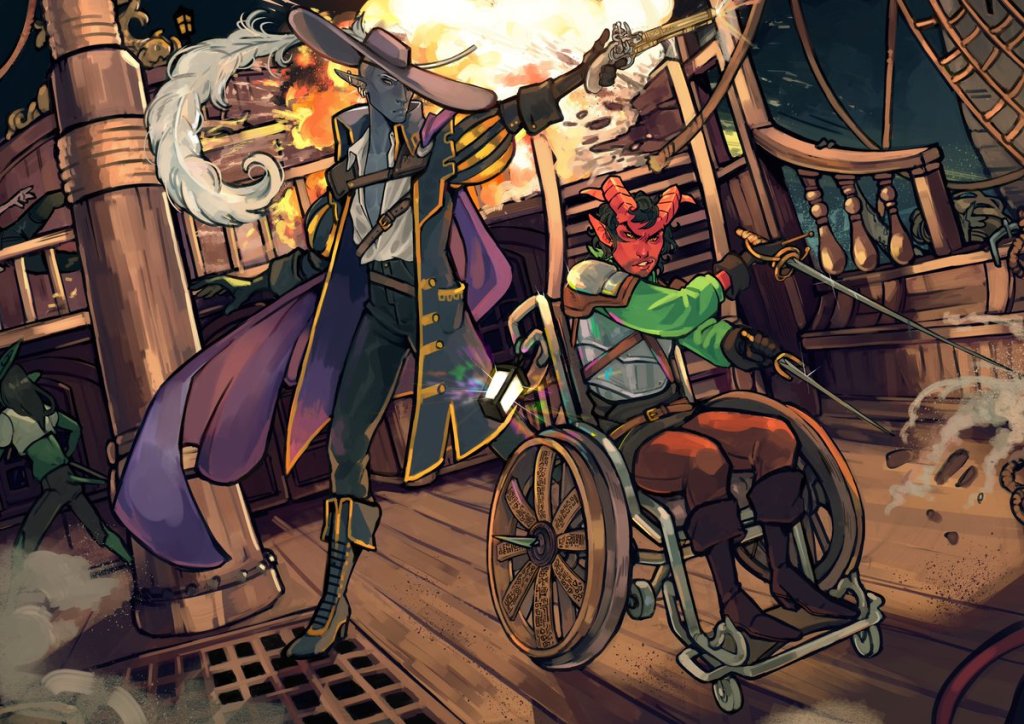
My character’s autism makes him, him. I’m definitely not the only one who has written their disabilities into their characters; it’s a fantastic way to make your character relatable to you. Which is why I was a bit baffled when I saw a post online discussing an image of a fantasy wheelchair user, with multiple people saying “wouldn’t disabilities heal with magic in a fantasy universe?”
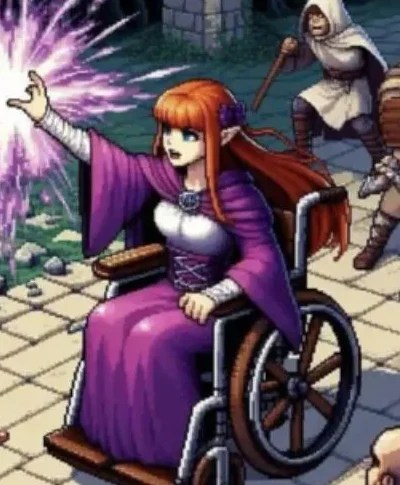
This sentiment came out of left field for me. For a start, tabletop games like DnD are massively popular with neurodivergent people. Neurodivergent characters are common as a result. As someone who wanted their disability represented in the games they play, it makes perfect sense to me that people with other disabilities, whether they be physical or invisible, would want to make their own characters relatable to them. A wheelchair user wanting to make a wheelchair user character? Understandable! What an awesome opportunity to come up with a fantasy style mobility aid! In fact, DnD Beyond brought in the Combat Wheelchair a few years ago to accommodate those who wanted to create a disabled character in game, allowing players to use the chair as an effective method of offence and defence.
The idea that disabilities would be “healed” with magic in a fantasy world implies that disabilities are diseases or wounds that are in need of fixing. It suggests that disabled people are suffering and that every disabled person wants to be neurotypical and/or able-bodied. This isn’t the case. Not everyone sees their disability as something wrong with them, or something they want resolved. Disabled people can live fulfilling lives. To me, the thought of casting Cure Wounds or Lesser Restoration to “fix” my character’s disability is absurd. There’s nothing to cure. That’s just how he is. I play a cleric, and I’ve always seen restorative spells as fixing broken bones or injuries that are recent. A lot of the time, disabilities aren’t even caused by injuries. Your character wouldn’t have the cool scars you put on them if restorative magic fixed anything and everything.
Of course, not everyone feels the same way. If you have a disability and you want to make a character that doesn’t, that’s totally fine too! But respecting people’s decisions to include more diverse characters should be the norm. Everyone should be able to make their characters however they want.



 SweetieGames
Leave a comment